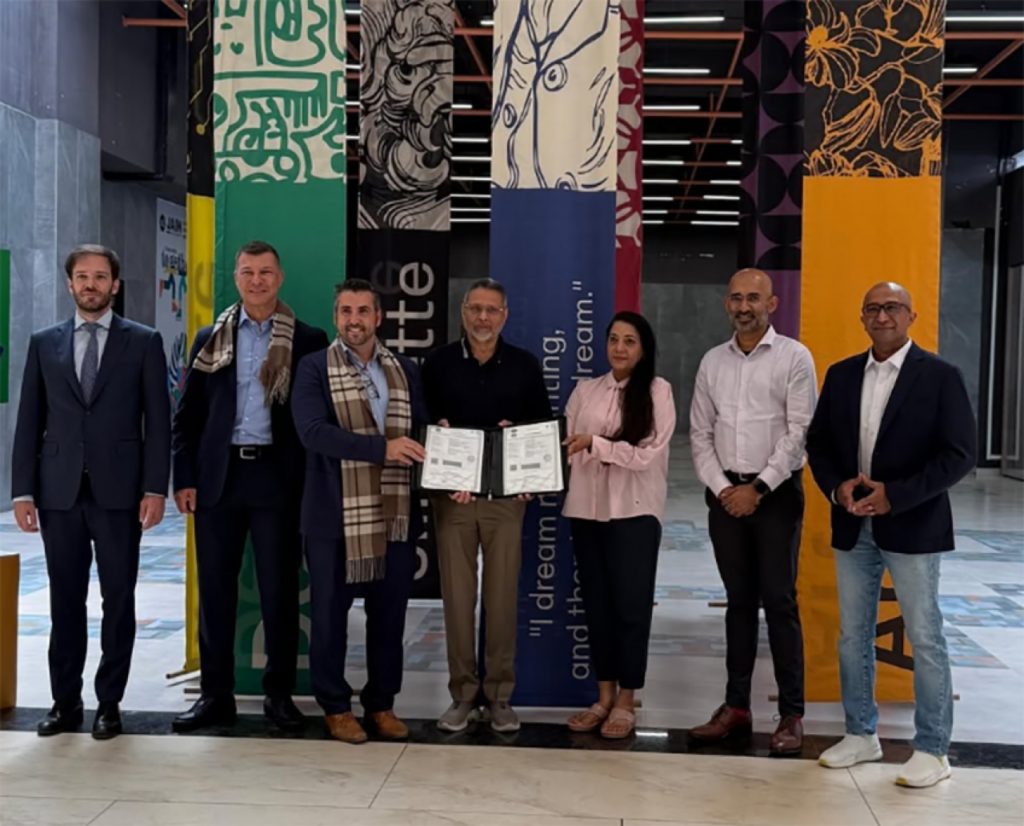
UCAM begins an academic Partnership with Jain University in India
Both institutions will work together focusing on academic excellence, innovation and global engagement.
View Post


Here’s something that genuinely excites me: the education landscape is changing, and it’s changing fast. Gone are the days when you had to pack your bags and spend a fortune to get a European degree. Today, collaborative degree programs are bridging continents and creating opportunities that seemed impossible just a decade ago.
Think about it. You get to study in India, surrounded by familiar culture and community, while earning credentials recognized across Europe. It’s not just about saving money on living expenses (though that’s a huge plus). It’s about getting the best of both worlds.
These programs typically involve partnerships between Indian universities and European institutions. You might spend most of your time at your home campus in India, with shorter stints abroad, or complete your entire coursework locally while following European curriculum standards.
| Aspect | Traditional Study Abroad | Collaborative Degrees |
|---|---|---|
| Cost | ₹30–50 lakhs+ | ₹8–15 lakhs |
| Location | Fully abroad | Primarily India |
| Recognition | European | Indian and European |
| Cultural adjustment | High | Balanced |
What really gets me excited is how this democratizes quality education. Students from tier-2 and tier-3 cities now have access to world-class programs without the financial strain of relocating entirely.
The future of education isn’t about where you physically sit in a classroom—it’s about the quality of learning and the value of your credentials. And collaborative degrees are proving exactly that.
The author is Dr Sujay Nair, Dean and Director at the School of Global Studies and the School of Design, Media and Creative Arts at JAIN (Deemed-to-be University)
 Uncategorized
Both institutions will work together focusing on academic excellence, innovation and global engagement.
View Post Research & Innovation Desk
Exploring how ESG, digital tools, and responsible leadership are shaping global education frameworks.
View Post SOGS Student Voice
A student’s journey through international exposure, cross-cultural learning, and global academics.
View Post Industry Expert Panel
Industry perspectives on skills, mindset, and global exposure needed in hospitality and experience-led sectors.
View Post SOGS Academic Team
How globally aligned UG–PG programmes help students build seamless academic and international career journeys.
View Post